SuperFrecator (Plasma Pen)
What can it do:
- fibroblast plasma skin tightening
Nom-surgical treatment alternative to a blepharoplasty
- High frequency electric current
Used to dehydrate the skin area
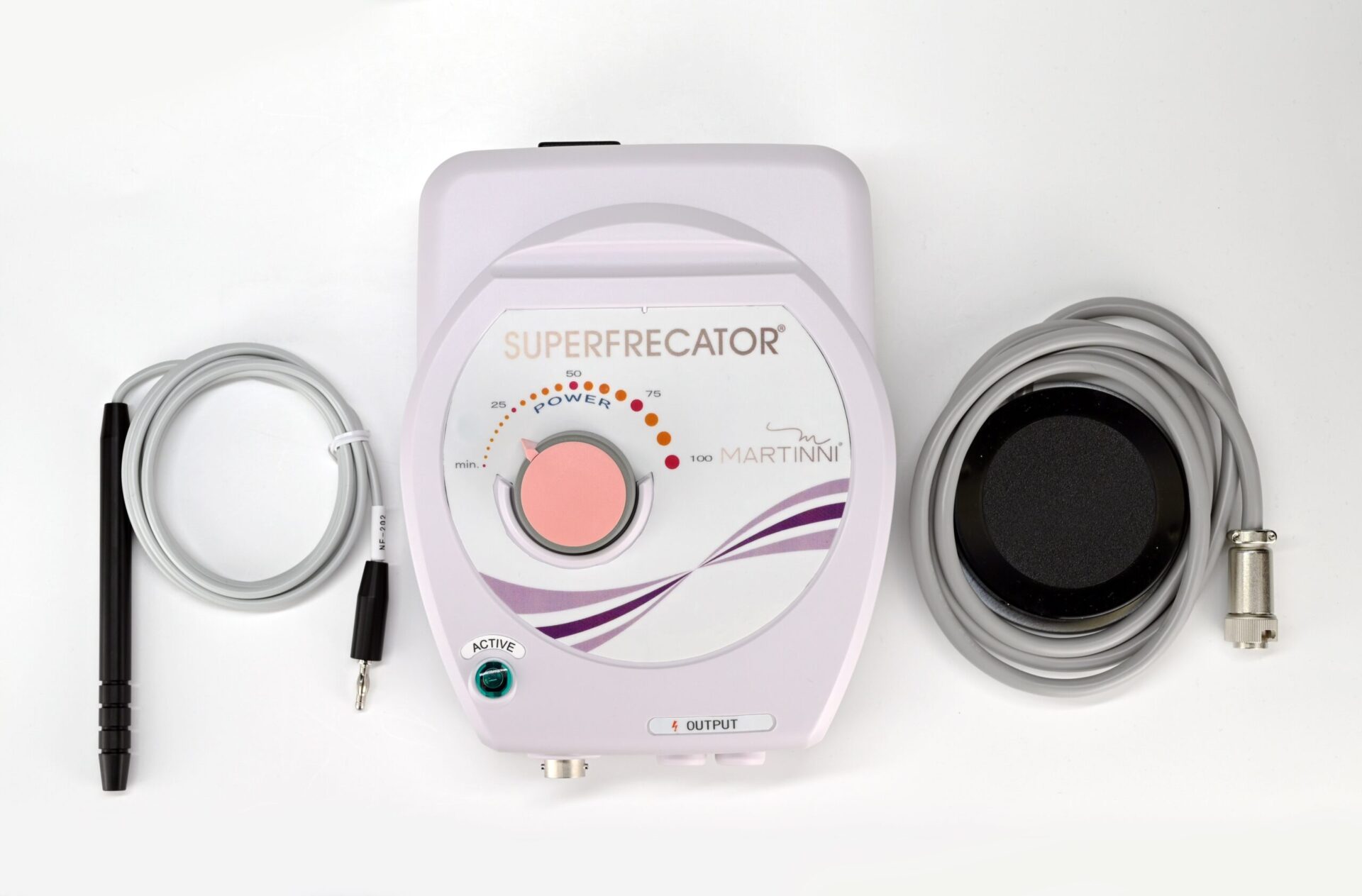
- Non-surgical treatment alternative to a blepharoplasty
Skin Concerns Targeted:
Soft, flesh-colored or slightly darker skin growths most commonly found on the neck, armpits or the trunk. Could cause irritation when in contact with clothes or skin friction.
Dermofibromas are small reddish-brown bumps that result from accumulation of over-produced collagen, from fibroblasts under the skin. Could become bothersome or cause irritation over time.
Seborrheic keratosis is a round or oval flesh-colored, brown or black growth that can appear anywhere on the skin. Treatment is not necessary unless the keratosis becomes irritating, itching or cosmetically undesirable.
Cherry angiomas or ruby spots are harmless clusters of dilated capillaries that become more common with age. Although they are painless and harmless, they may bleed profusely until pressure is applied if injured.
A spider angioma, or spider nervus singular and nevi-plural, is another type of swollen ∕ dilated group of blood vessels found slightly beneath the surface. Although they do not require treatment, they may be removed for appearance purposes.
Dilated capillaries are ruptured thread veins similar to both cherry and spider angiomas, but less confined. They can be cause by sun damage, alcohol consumption, eating spicy food, High blood pressure and other skin traumas. Although they do not require treatment, they can be removed for appearance purposes.
Hyperpigmentation is a common, usually harmless condition, in which patches of skin become darker in color than the surrounding skin. Freckles, age spots and other darker skin patches can become darker or more pronounced when skin is exposed to the sun and can be treated and removed for appearance purposes.
Cholesterol deposits or Xanthomas are fatty deposits that build up under the skin. Most commonly seen with age, this condition is not typically associated with age.
Sebaceous hyperplasia is a disorder causing overproduction of sebum, seen mainly on the forehead, nose and cheeks, and facial skin. It is most commonly associated with hair follicles but can be found in hairless regions of the skin as well and can affect all ages, even babies.
Milia are dead skin cells trapped within the surface tissues of the nose, cheeks and chin or inside the mouth. Although it may look it, it is not a form of acne.
A pimple is a kind of acne, and one of the many results of excess oil clogging the pores. Pustules occur when there is a high break in the follicle wall, white blood cells invade, and pus is formed. It is most commonly known as a typical acne pimple.
There are many tine pores on the skin, which are actually outlets of sebaceous glands, also known as oil glands. The highest number of oil glands are fond on the face, chest and back. When dirt, sweat and oil get accumulated in these pores, they result in the clogging of pores and cause acne pimples.
Syringoma are benign, non-cancerous small papules cause by overactive sweat glands. They are quite often mistaken for other skin conditions like milia and xanthoma.
